Election results in Colombia: how almost 24 million votes are counted in under two hours
Written by Joaquín Aaron González / June 03, 2026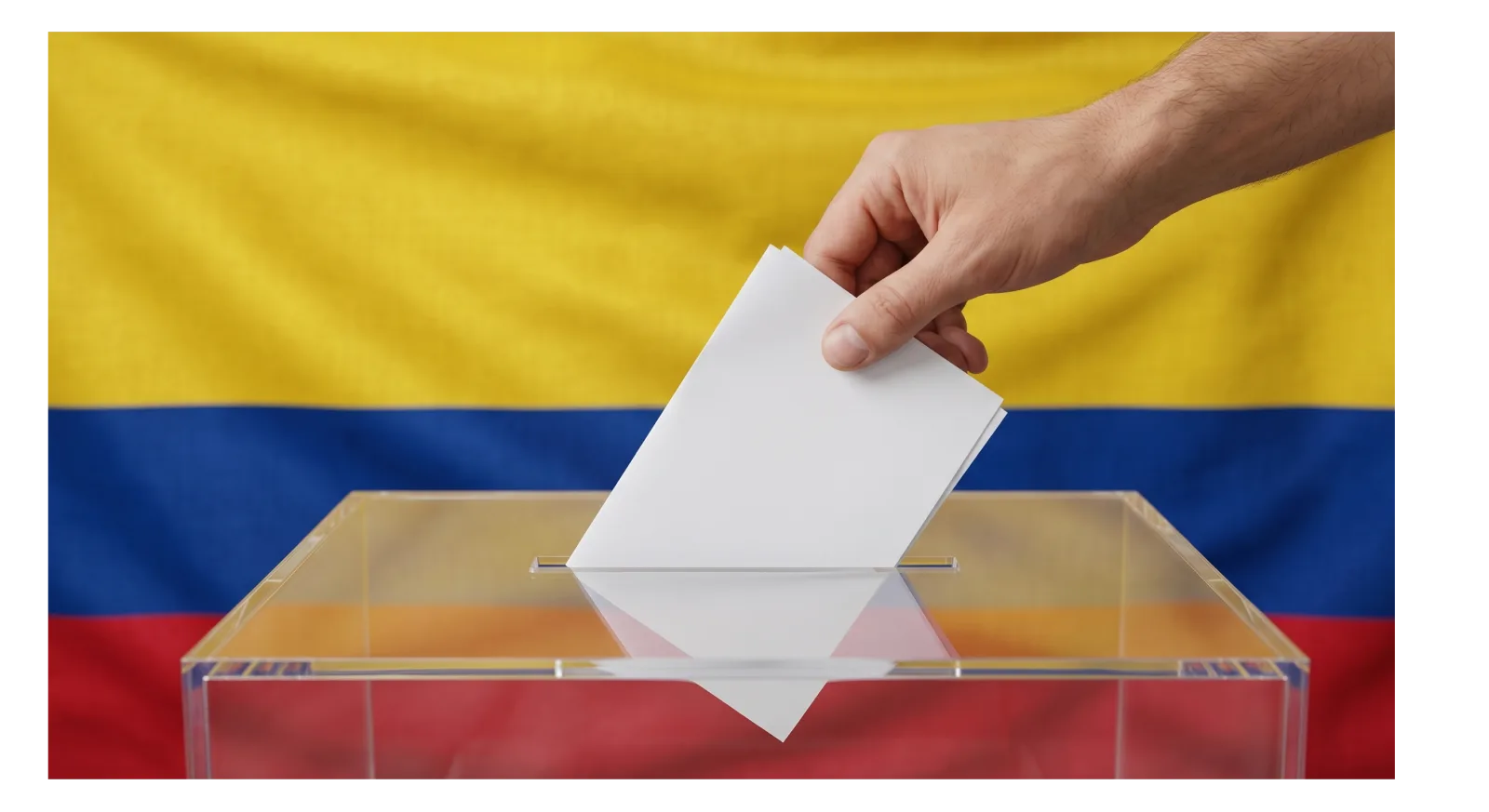
Colombia counted 95% of the vote in less than an hour and a half through an agile, coordinated and well-structured electoral system that combines simplicity, clear roles and efficient reporting mechanisms.
On Sunday, 31 May 2026, polling stations in Colombia closed at four in the afternoon. An hour and a half later, the National Civil Registry had already published 95% of the votes on its website. This was neither cutting-edge technology nor magic: it was the result of a process design that makes Colombia's system radically different, in several respects, from those of most countries in the region.
An election with a single question
On 31 May, voters were choosing only one thing: the president–vice-president ticket. There were no simultaneous elections for senators, mayors or referendums. The ballot was a single sheet on which the voter marked one box. This makes counting at each polling station considerably faster than in systems where officials must separate and classify several kinds or levels of ballot. It may seem like a minor detail, but its effect multiplies when repeated across 122,020 polling stations at the same time.
Polling officials: randomly selected citizens, not volunteers
Each polling station has six officials selected by electronic lottery from citizens aged between 18 and 60. For the first round on 31 May, the selection took place between 4 and 6 May. Participation is not voluntary: anyone selected temporarily becomes a public servant and is required to attend. Excuses are accepted only for justified reasons. More than 850,000 Colombians were appointed for this election.
What happens when polling stations close
At four in the afternoon, polling officials count the signatures, open the ballot box and count the votes aloud. Before counting begins, they verify that the number of ballot papers does not exceed the number of people who actually voted. If there are more ballots than signatures in the register, all ballots are returned to the box, the excess is drawn at random without being opened and then destroyed. This is the polling-station balancing procedure: when the extra ballot cannot be identified, the inconsistency is resolved randomly and documented before counting starts.
The results are recorded on the well-known E-14 form, produced in three identical copies: one for transmitting results, which feeds the preliminary count that same evening; one for the custodians responsible for keeping it with the ballot papers in a sealed bag; and one for Registry delegates, who scan and publish it on the official portal. All three copies must match. For this election, more than 360,000 tally sheets were published online on election day, allowing any citizen to find the record from their polling station and compare the figures.
The preliminary count: a snapshot every five minutes
Once the E-14 form is completed, the transmission copy leaves the polling place and its figures are dictated by telephone to one of 28 Telephone Reception Centres located in departmental capitals. Operators transcribe the numbers into standardised forms, which are digitised and consolidated. This flow feeds bulletins published every five minutes on the official website. Each bulletin remains available rather than replacing the previous one, making it possible to see how the count stood at 4:30, 5:10 or 6:05, for example.
It is important to clarify that this preliminary count has no legal validity; it is for information purposes. The official result is determined by scrutiny commissions, which review tally sheets, resolve challenges and issue the legally binding decision. Historically, however, the two figures match very closely. In this election, with the official scrutiny 99.98% complete, the Registry confirmed a 99.94% match with Sunday's preliminary count.
Why it is so fast
The speed of Colombia's system cannot be explained by a single factor. It is the accumulated effect of several mutually reinforcing design decisions: a one-page ballot, counting without intermediate protocols, telephone transmission that does not depend on physically transporting records, and a network of reception centres operating in parallel across the country. Together, these small decisions allow an election with almost 24 million votes to produce a consolidated trend before the afternoon is over.